
Table of Contents
Keeping algae away in Singapore comes down to consistent swimming pool maintenance focused on correct chlorine and pH levels, strong circulation, and diligent cleaning that matches local tropical conditions and health guidance. Reliable swimming pool maintenance also means daily testing, weekly shocking, and protection from intense sun so sanitizer stays effective despite heat, humidity, and heavy rainfall.
Why algae thrives here
Warm water, strong UV, and frequent rain accelerate sanitizer demand and create ideal conditions for algae, so pools in tropical climates need tighter chemistry control and more frequent upkeep. Sunlight and heat reduce free chlorine faster, while contaminants from swimmers and weather further deplete sanitizer, increasing the risk of blooms. High humidity and warm surfaces also help biofilms anchor to walls and steps unless brushed and vacuumed on a tight cadence.
Core chemistry targets
Singapore’s public guidance sets practical targets that homeowners can follow: free chlorine at 1–3 ppm and pH 7.2–7.8 keep water comfortable and sanitizer effective. The CDC echoes these ranges, noting chlorine works best when pH is held in the 7.0–7.8 band, with at least 1 ppm free chlorine in pools. Keep total alkalinity near 80–120 ppm to stabilize pH swings so sanitizer remains predictable day to day.
Sun protection with CYA
Cyanuric acid shields chlorine from UV, and the commonly recommended sweet spot is 30–50 ppm for outdoor pools, since excess CYA can slow sanitizer and encourage cloudy water or algae. If using a salt system, a higher CYA of 60–80 ppm is typical to protect the chlorine generated at the cell in full sun. Always adjust free chlorine to match CYA, keeping at least 7.5 percent of CYA as free chlorine for reliable disinfection during bright periods.
Circulation and filtration
Algae exploits dead spots, so aim for vigorous circulation that turns the pool over multiple times daily and keeps returns pointed to sweep debris toward the skimmer. In hot weather, many operators run the pump roughly 12 hours per day to maintain clarity and sanitizer distribution, especially during peak sun and after heavy bather load. Maintain filter efficiency by cleaning cartridges, backwashing sand or DE when pressure rises 8–10 psi, and inspecting baskets to avoid flow restrictions.
Jet direction and skimmers
Angle return jets about 45 degrees to push a gentle circular flow across the surface and disturb corners where algae starts. Keep water level about halfway up the skimmer opening so the skimmer can capture leaves and films before they sink and feed algae.
Mechanical cleaning that prevents blooms
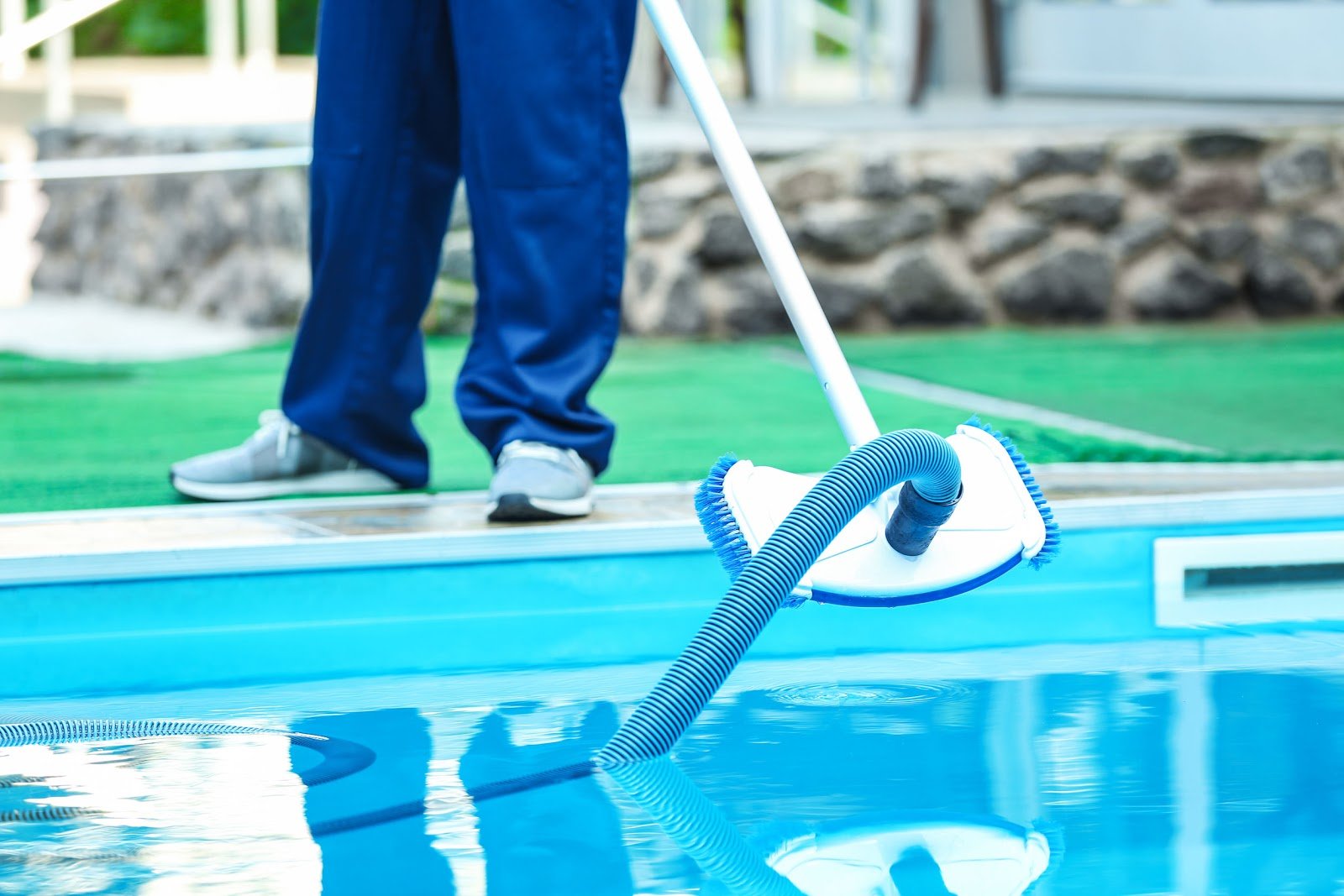
Routine brushing dislodges biofilm so sanitizer can work; focus on walls, steps, benches, lights, and behind ladders where algae first appears. Vacuum at least weekly, and more often after storms, to remove fine debris that fuels algae. Clean the tile line to prevent buildup that can harbor microorganisms and shadow weak circulation zones.
Sunlight and nutrient control
Reducing direct sun on water surfaces lowers sanitizer burn-off and slows algae; consider umbrellas or partial shade during peak hours. Keep a well-fitted cover on when not swimming and after chemical adjustments to preserve chlorine and block debris. Use phosphate removers selectively when tests show elevated phosphate, since lowering this nutrient can make algae prevention easier in warm water.
After rain and heavy use
Singapore’s rain dilutes sanitizer and can wash organics into the pool, so test and rebalance chlorine and pH promptly after storms. Shock weekly in warm months, and always after big swim days or murky episodes, to oxidize contaminants and reset sanitizer headroom. If water turns hazy, inspect and clean filters, empty baskets, and verify pump flow before resuming normal runtime.
Practical weekly and monthly plan
- Daily: Test free chlorine and pH, adjust as needed, and confirm clear water and proper circulation to maintain Singapore’s target ranges.
- Weekly: Brush thoroughly, vacuum, empty baskets, and perform a shock treatment to stay ahead of algae in hot, sunny conditions.
- Monthly: Deep clean hard-to-reach areas, inspect equipment for leaks or wear, and service filters to keep turnover and clarity consistent.
Algae types and fixes
| Algae type | How it looks | First response | Follow-up |
|---|---|---|---|
| Green algae | Cloudy green water or film on walls | Brush thoroughly, shock to 10–20 ppm FC depending on CYA, run pump continuously until clear | Rebalance to 1–3 ppm FC and 7.2–7.8 pH, then maintain weekly shock in warm months |
| Yellow/mustard | Dusty yellow patches on shaded walls and steps | Aggressive brushing, strong shock, and targeted algaecide if needed | Vacuum to waste, clean filters, and raise and hold FC on the high side of range for several days |
| Black algae | Dark spots with a tough head in plaster pores | Wire-brush spots to break the cap, shock, and consider a specialized algaecide | Repeat brushing daily and keep FC stable at the higher end of range until spots are gone |
Local standards to anchor the routine
Singapore’s aquatic-facility standards specify free chlorine at 1–3 ppm and pH at 7.2–7.8 for pools, which align with effective algae prevention and swimmer comfort. These benchmarks mirror CDC best practices for reliable disinfection and chemistry stability in outdoor pools. Local service guides also emphasize frequent testing, filter care, and proactive cleaning because tropical conditions accelerate algae growth if chemistry or circulation slips.
Smart troubleshooting
If sanitizer readings seem fine but blooms recur, test CYA and phosphates, since high CYA can slow chlorine and elevated nutrients can feed algae in hot water. Review pump runtime and jet angles to eliminate dead spots, then brush more often for a week to strip biofilm and help sanitizer contact surfaces. After clearing algae, wash or replace filters and deep clean accessories to prevent reintroduction from hidden reservoirs.
When to call a pro
Persistent blooms, recurring cloudiness, or equipment faults like poor flow or failing seals warrant professional diagnostics and service. Local technicians can audit circulation, filtration, and chemistry, then update maintenance plans tailored to Singapore’s heat, UV, and rainfall patterns. Professional teams also manage periodic resurfacing, leak detection, and component replacement to sustain water quality and hardware longevity over the long term.
Key takeaways
- Hold free chlorine at 1–3 ppm and pH at 7.2–7.8, test daily, and adjust quickly to keep sanitizer effective and algae at bay.
- Use cyanuric acid for sun protection at about 30–50 ppm, and match free chlorine to CYA so UV and heat do not overwhelm disinfection.
- Run strong circulation and clean, efficient filtration, typically around 12 hours daily in hot weather to reduce dead zones.
- Brush, vacuum, and shock weekly, and retest after storms or heavy use to restore clarity and sanitizer headroom.
- Control nutrients with timely debris removal and phosphate management as needed to make algae prevention easier in the tropics.
By anchoring the routine on balanced chemistry, robust flow, and consistent cleaning, a tropical pool stays clear, comfortable, and algae-free through Singapore’s heat and rain.